Tooth loss is a condition that anyone may experience with age or due to various health issues. For individuals who have lost all of their teeth, one of the most common solutions that improves quality of life both aesthetically and functionally is complete dentures, commonly known as false teeth.
What Are Complete Dentures?
Complete dentures are made for individuals who have no natural teeth remaining and are full artificial dental prostheses placed on the upper and lower jaws. Made from acrylic material, these dentures rest on the gums and palate to gain retention and help restore essential daily functions such as chewing, speaking, and smiling.
Who Are Complete Dentures Suitable For?
Individuals who have lost all teeth in the upper or lower jaw
Those who are not medically suitable for fixed prostheses or implants
Patients seeking an affordable and fast solution
Individuals whose bone structure is insufficient for implants
Older adults and patients who can adapt to denture use
What Are the Types of Complete Dentures?
1. Conventional Complete Dentures (Full Acrylic Dentures)
Made entirely of acrylic
Tooth and gum shades are customized for aesthetic harmony
Rests on the palate and retains by a suction (vacuum) effect
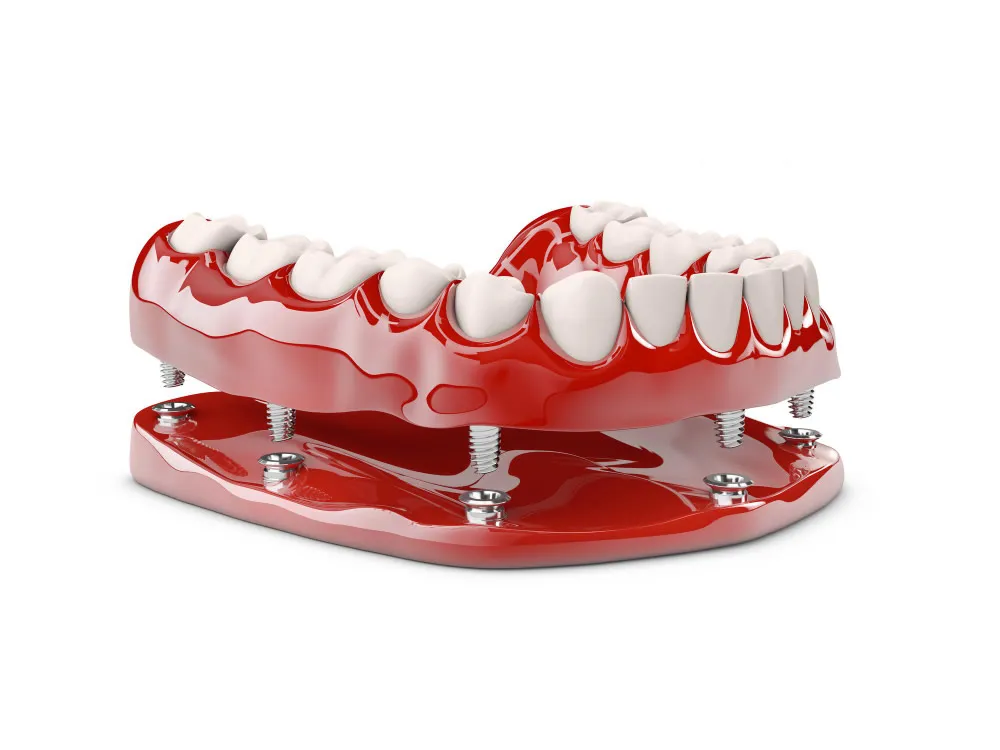
2. Implant-Supported Complete Dentures (Hybrid Dentures)
Supported by implants as an underlying structure
May be snap-retained or screw-retained
More stable with improved chewing comfort
Especially recommended for lower dentures
Advantages of Complete Dentures
Aesthetic Smile: Improves facial aesthetics by eliminating the appearance of missing teeth
Functional Solution: Helps restore speaking and chewing ability
Affordable: More cost-effective than fixed prostheses and implants
Fast Treatment: Can be prepared within 1–2 weeks after impressions are taken
Removable Design: Provides convenience for cleaning and maintenance
Painless Option: Does not require surgery (for conventional dentures)
How Are Complete Dentures Made?
Examination and Planning: The dentist evaluates the jawbone structure and the condition of the oral tissues.
Impressions: Upper and lower jaw impressions are taken.
Try-In: A trial is done to check tooth arrangement and appearance.
Delivery: The final denture is delivered and fit checks are performed.
Adjustments If Needed: If sore spots occur, polishing or relief procedures are performed.
How Long Do Complete Dentures Last?
The average lifespan of complete dentures is generally 5 to 7 years. However, because jawbone resorption and soft-tissue changes may occur over time, periodic check-ups and renewal—if necessary—are recommended.
Is It Difficult to Use Complete Dentures?
An adaptation period of a few weeks is usually required. During this time:
Mild speech changes may occur
Shifting or sore spots may be noticed while chewing
However, this is temporary; as the muscles adapt, comfort and control improve over time
Most patients fully adapt to their new dentures within 1–2 weeks.
How Should Complete Dentures Be Maintained?
Clean at least once a day using a special denture brush
Remove at night and store in a container filled with water
Use denture cleaning tablets several times a week
Also clean oral tissues with a soft brush or gauze to maintain oral hygiene