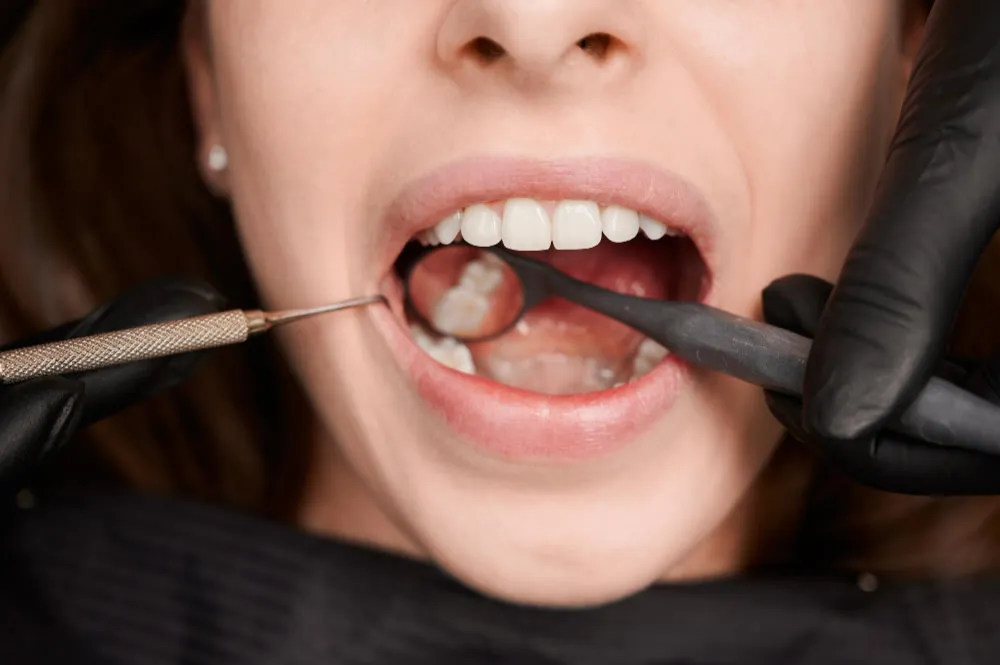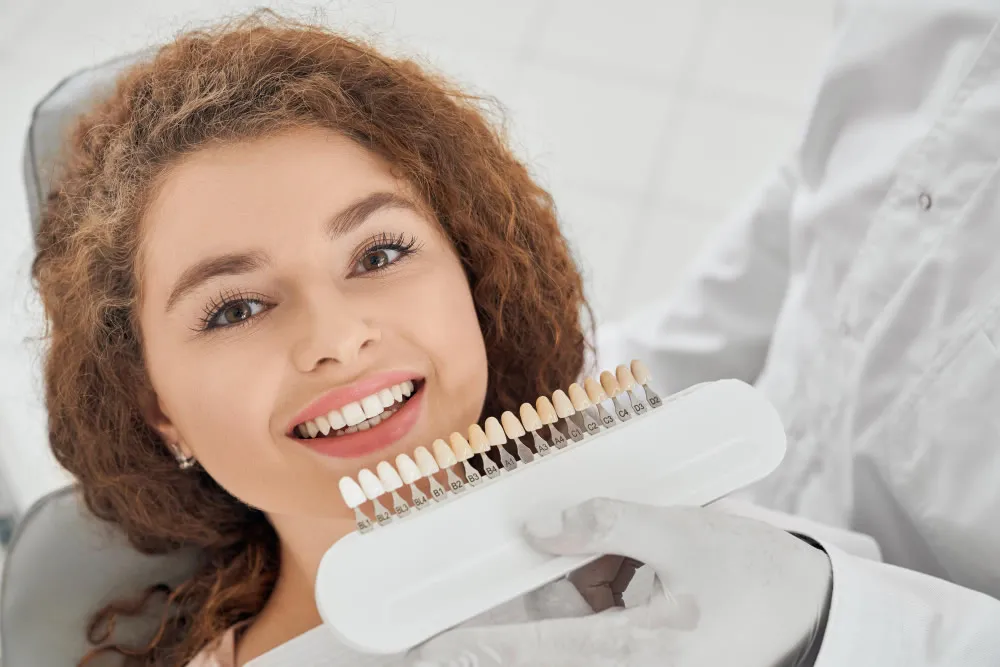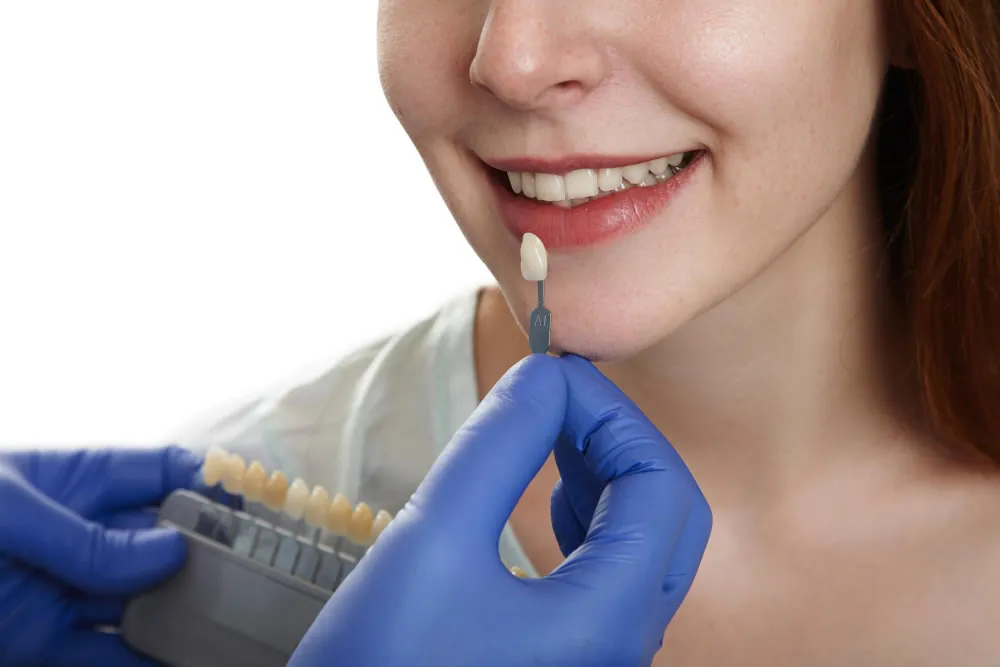
Today, one of the most preferred treatments in aesthetic dentistry for those who want the closest results to a natural appearance is the E-Max Crown. Standing out in smile design with both its durability and light transmission, this type of restoration has become the first choice, especially for those who want to make a difference in anterior tooth aesthetics.
What Is an E-Max Crown?
E-Max is a type of metal-free all-ceramic crown produced from a special high-strength lithium disilicate glass-ceramic. Although it has an extremely thin structure, it is quite strong. Its biggest advantage is that it has light transmission closest to natural tooth enamel.
Thanks to this feature, E-Max Crowns provide an aesthetic appearance that is virtually indistinguishable from a natural tooth when viewed from the outside.
In Which Cases Is an E-Max Crown Applied?
When there are aesthetic concerns in the front teeth
For restoring discolored, worn, or deformed teeth
To camouflage mild crowding
In treatments to close diastema (gaps between teeth)
For teeth with fractures, cracks, or trauma
In cases not suitable for laminate applications
Advantages of the E-Max Crown
High-End Aesthetics: It provides a natural tooth appearance thanks to its light transmission.
Metal-Free: It does not create a gray reflection or discoloration around the gum line.
Gum Compatibility: With its biocompatible structure, it provides excellent harmony with the gums.
Color Stability: Even after years, it is not affected by habits such as tea, coffee, or smoking and does not change color.
Fracture Resistance: Despite its thin structure, it is a highly durable material.
How Is an E-Max Crown Done?
Examination and Planning: The dentist evaluates the patient’s oral structure and creates an appropriate treatment plan.
Tooth Preparation: Minimal reduction is performed on the front and surrounding surfaces of the teeth.
Impression Taking: Tooth measurements are taken using digital or conventional methods.
Laboratory Stage: A custom crown is prepared using E-Max material.
Application: The prepared crown is bonded to the tooth with special adhesives and final adjustments are made.
Who Is an E-Max Crown Suitable For?
Individuals with high aesthetic expectations
Those with shape and color problems in the front teeth
Those who do not want metal-supported crowns
Individuals without a teeth clenching habit
Individuals with healthy gums
Note: For back teeth or areas subjected to excessive force, zirconia may be preferred instead of E-Max. This is because zirconia provides higher resistance to impacts.
Differences Between the E-Max Crown and Other Crowns
| Feature | E-Max | Zirconia | Metal-Supported Porcelain |
|---|---|---|---|
| Aesthetics | Very high | High | Moderate |
| Durability | Moderate–high | Very high | High |
| Light Transmission | Yes (very natural) | Low | No |
| Area of Use | Front teeth | Front and back | Especially back teeth |
| Metal Content | No | No | Yes |
Things to Consider After an E-Max Crown
Oral hygiene should be maintained. (Regular brushing, flossing)
Care should be taken not to crack hard foods with the teeth.
A night guard is recommended for patients with teeth clenching problems.
A regular dental check-up should be done every 6 months.
Conclusion
The E-Max Crown is one of the most advanced ceramic crown types that meets both aesthetic and functional expectations. If you want to achieve a natural smile without harming your tooth structure, E-Max Crowns may be an ideal option for you. With planning carried out by an expert dentist, it is possible to achieve a confident smile in a short time!