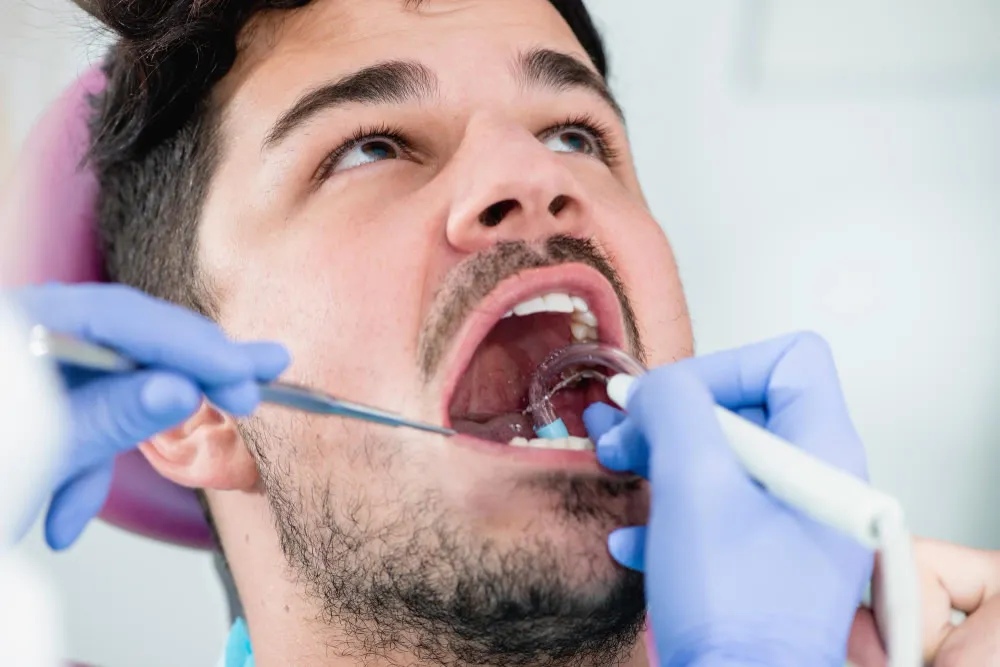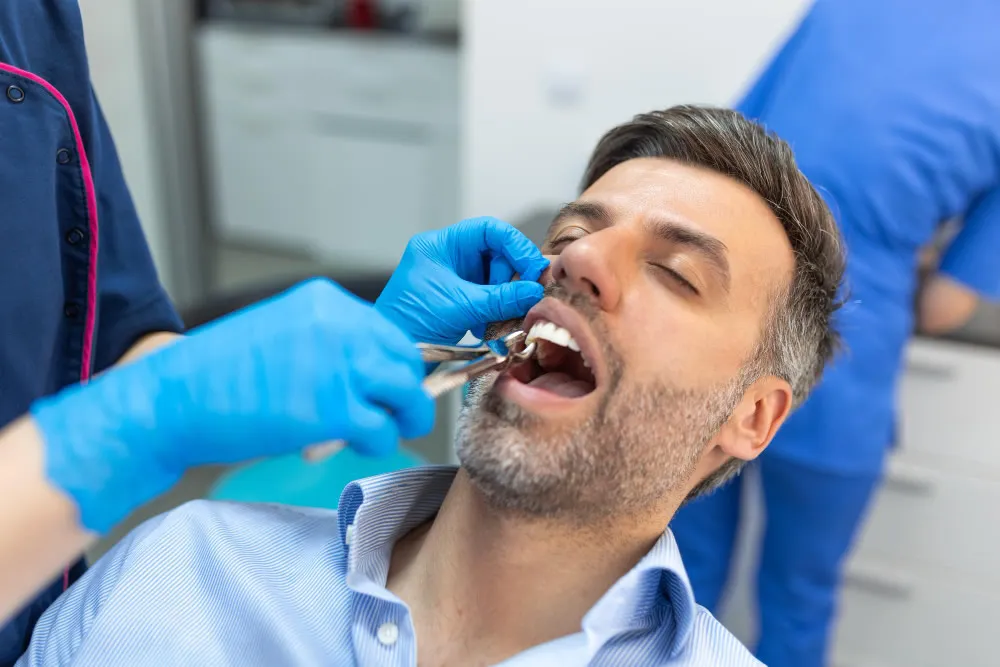
Bone grafting is a surgical procedure performed to rebuild bone tissue that has been lost or is insufficient in the mouth. It is commonly preferred to provide the bone volume required for fixed restorations such as dental implants. In this procedure, bone materials obtained from the patient’s own body or from synthetic/organic sources are used.
Why Is Bone Grafting Needed?
After tooth loss, the jawbone gradually undergoes resorption (bone loss). This may result in a lack of adequate support for implant or other prosthetic treatments. With bone grafting:
Sufficient bone support for implants is provided,
The jaw structure is restored aesthetically and functionally,
The gum contour is improved,
A sunken appearance caused by advanced bone loss is prevented.
In Which Cases Is Bone Grafting Performed?
If bone volume is insufficient in the area where a dental implant will be placed,
If bone preservation is needed after tooth extraction,
If bone loss has occurred due to trauma or causes such as cysts/tumors,
If the bone around the teeth has resorbed due to periodontal disease,
Before procedures such as sinus lifting or ridge augmentation.
Types of Bone Grafts
Bone grafts are divided into four main groups based on their source:
1. Autogenous Graft (Autograft)
This is bone taken from the patient’s own body (usually from the jaw, hip, or tibia). It has the highest compatibility and success rate.
2. Allogeneic Graft
This is human-derived bone tissue (obtained from donors). It is sterilized and then applied to the patient.
3. Xenograft
This is animal-derived bone material (usually bovine). Over time, it is resorbed by the body and replaced with new bone tissue.
4. Synthetic Graft (Alloplastic)
These are artificial bone materials produced in a laboratory. They can be used safely thanks to their biocompatibility.
How Is Bone Grafting Performed?
1. Examination and Planning
First, the jawbone is evaluated in detail. Bone thickness, height, and density are measured with panoramic X-ray and 3D tomography (CBCT).
2. Surgical Procedure
The procedure is usually performed under local anesthesia. The surgeon opens the gum tissue and places the graft material into the deficient bone area. In some cases, a special covering called a membrane is also applied to protect the graft.
3. Healing Process
After bone grafting, the healing period typically ranges from 3 to 6 months. During this time, the graft integrates with the body and new bone tissue forms.
4. Implant Placement
Once grafting is completed and sufficient bone has formed, the implant procedure is performed.
Post–Bone Grafting Care
Smoking: Must be stopped; it negatively affects bone healing.
Oral Hygiene: Careful cleaning reduces the risk of infection.
Medication Use: Antibiotics and painkillers prescribed by the dentist should be taken regularly.
Diet: Soft and lukewarm foods should be consumed in the first days; very hot or hard foods should be avoided.
Protection from Trauma: Avoid applying pressure to the grafted area.
Risks and Possible Complications of Bone Grafting
Infection
Displacement of the graft material
Rejection of the graft by the body (very rare)
Swelling, bruising, and pain (temporary)
With proper planning and an expert dentist’s implementation, these risks can be minimized.
Bone Grafting and Implant Success
A successful bone grafting procedure directly affects the longevity and success of implant treatment. When sufficient bone volume is achieved, the integration of the implant with the jawbone (osseointegration) occurs much more predictably.
Conclusion
Bone grafting is a safe and effective procedure in modern dentistry that enables implant treatments. By eliminating bone loss after tooth loss, it helps restore oral health both aesthetically and functionally. With proper planning, high-quality materials, and an experienced team, long-term successful results are achievable.