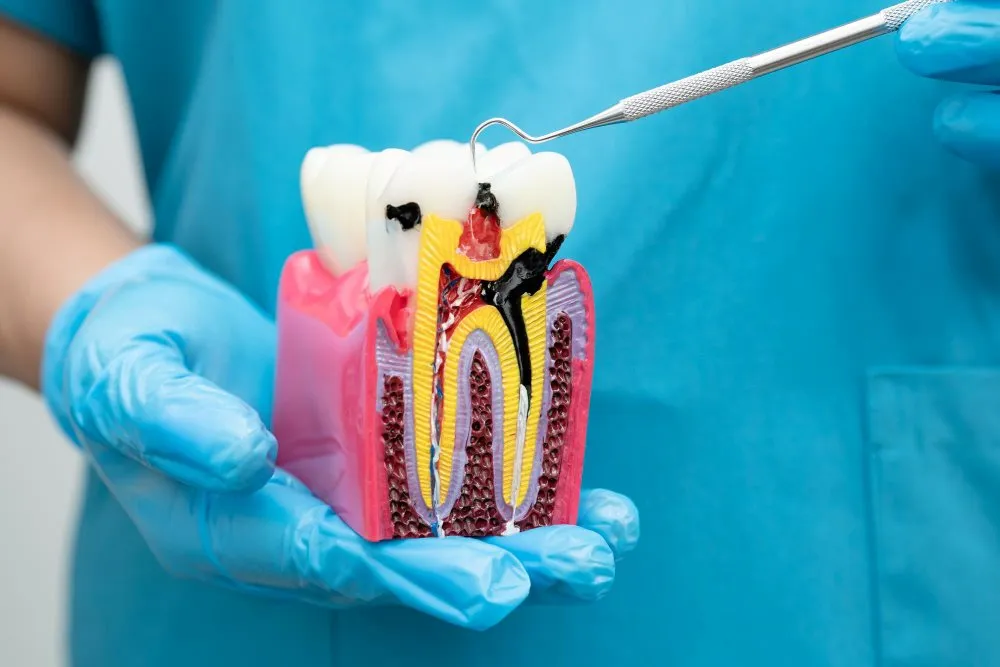
Root canal treatment is a dental procedure applied when the nerve and blood vessel tissue inside the tooth becomes inflamed or damaged. It is preferred in cases where the tooth is deeply affected due to decay or trauma. In this way, the tooth is preserved instead of being extracted and continues to function. Today, root canal treatment is one of the most effective ways to save a tooth.
The treatment process begins with an X-ray. Thanks to the X-ray, the condition of the tooth roots and the extent of the infection are evaluated. Then, local anesthesia is applied so the patient does not feel pain during the procedure. The infected pulp tissue inside the tooth is removed, the root canals are shaped, and they are sealed with special filling materials. This prevents bacteria from multiplying again.
The most important advantage of root canal treatment is preserving the natural tooth in the mouth. If a tooth is extracted, artificial solutions such as implants or bridges are required. However, with root canal treatment, the tooth’s natural structure is maintained and chewing function continues. This is highly valuable both aesthetically and in terms of oral health.
The patient does not feel pain during the procedure. However, mild pain or sensitivity lasting a few days after treatment is normal. This usually subsides in a short time. Following the dentist’s recommendations, using prescribed pain relievers, and maintaining good oral hygiene help make the recovery process more comfortable.
The longevity of a root canal–treated tooth depends on the tooth’s structure and the protective procedures performed afterward. Generally, a crown is recommended for a tooth that has undergone root canal treatment. This makes the tooth more durable and reduces the risk of fracture. With regular check-ups and good oral care, a root canal–treated tooth can be used without problems for many years.
If left untreated, the infection may spread to surrounding tissues and cause serious complications. Abscess formation in the jawbone, severe pain, and tooth loss may occur. For this reason, root canal treatment is a procedure that should not be neglected in advanced decay and cases where the tooth nerve is affected.
In conclusion, root canal treatment is an effective and reliable method that allows the tooth to remain in the mouth without extraction. When performed correctly, it offers a long-lasting solution both aesthetically and functionally.