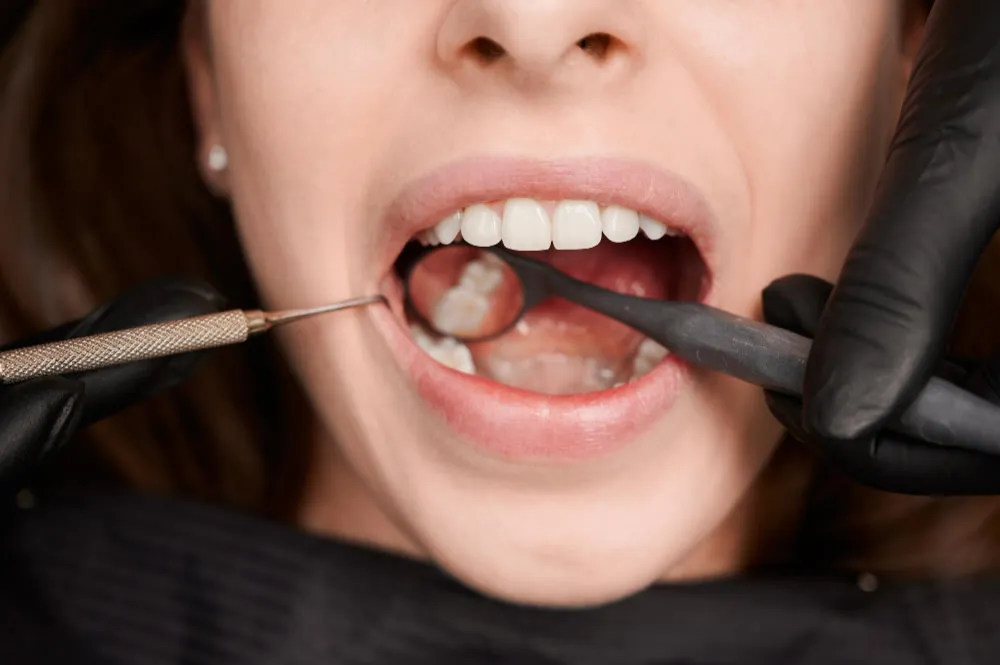
A zirconia crown is a metal-free application used in cosmetic dentistry; it is biocompatible, does not cause allergic reactions, has high light transmission, provides an aesthetic appearance, allows us to work in natural tooth forms, and—due to its monolithic layers—offers higher strength as an aesthetic dental restoration, just as zirconium is used in many industrial fields, the military sector, and space science.
How Is a Zirconia Crown Done?
Zirconia crowns go through a series of stages, just like metal-supported porcelain restorations. Through certain reactions, zirconium metal is converted into zirconia ceramic and is applied in dentistry as a zirconia substructure and as a zirconia crown.
For zirconium metal that has passed through these stages to be used as a zirconia crown, the teeth must first be prepared;
A treatment plan is created with panoramic X-ray along with intraoral and extraoral examination
Under local anesthesia, a reduction (preparation) procedure is performed on the teeth to receive the zirconia crown
An impression is taken using state-of-the-art digital impression devices and sent to the laboratory
The produced zirconia crowns are cemented onto the prepared teeth using specific cementation materials
What Are the Types of Zirconia Crowns?
Zirconium metal undergoes a series of processes depending on the required areas and is used in the industrial sector, bomb production, aerospace engineering, and cosmetic dental treatments. In cosmetic dental treatments, different types of zirconia are used depending on the indication for the zirconia crowns to be made.
Layered Zirconia
These are zirconia crowns made by layering porcelain over a zirconia substructure. This type is more commonly preferred in the anterior region for smile design cases where aesthetics are a priority.
Monolithic Zirconia
These are zirconia crowns produced entirely from zirconia using CAD/CAM systems. Due to their monolithic layers, they offer a wide variety of shade options and, because they have high durability, they are more commonly preferred for full mouth or posterior regions.
Translucent Zirconia
This type of zirconia crown is produced from a more radiolucent zirconia alloy. Although it is more desired for anterior regions, its strength is lower due to the lower zirconia ratio it contains. Therefore, it is not preferred much for patients with heavy chewing, bruxism, or occlusal disorders.
Full Zirconia
These are the first zirconia crowns used in dentistry, with less shade variety compared to monolithic zirconia.
Who Are Zirconia Crowns Suitable For?
Zirconia crowns can be applied to almost all patients who have reached adulthood; however, in some cases, since certain factors may shorten the lifespan of the zirconia crowns to be made, we must first eliminate those factors.
These are;
Young patients under 18 whose jaw development is still ongoing
Patients with bruxism
Those with periodontal problems, meaning gum diseases
Completely edentulous patients or patients with significant tooth loss
After treatments that eliminate the factors in such patients are completed, zirconia crowns can be applied.
In Which Cases Is a Zirconia Crown Done?
Patients with aesthetic concerns
Patients with heavy stains on the teeth
Patients with fillings on many surfaces of the tooth
Patients with fractures in the teeth
Patients with missing teeth
Patients whose vertical dimension has decreased due to bruxism
Patients with orthodontic disorders who do not want orthodontic treatment
In short, zirconia crowns can be made for patients who have one or more of these, meaning they can be applied to almost all patients.
Is a Zirconia Crown a Painful Procedure?
To ensure you do not feel pain in any dental procedure, local anesthesia is also applied during the zirconia crown procedure, preventing you from experiencing pain throughout the treatment. Before the procedure, local anesthesia is applied to the relevant teeth, then tooth reduction (preparation) is performed. The anesthetic effect remains in the average human body for 2–3 hours. After the anesthesia wears off, we protect the teeth with temporaries made during the procedure to prevent sensitivity.
How Long Does It Take to Get a Zirconia Crown?
This process is carried out jointly by the dentist and the laboratory. After the teeth are prepared, the laboratory begins working based on the digitally taken impression, and delivery is typically within approximately 4 to 5 days. However, in anterior-region or full-mouth procedures, this period may be extended because aesthetic concerns are prioritized.
What Are the Differences Between Zirconia Crowns and Porcelain?
Zirconia crowns and porcelain dental restorations are among the most commonly used restoration materials in dentistry. While porcelain restorations were used first, over time, with the development of technology and due to allergic reactions associated with metal-supported porcelain, zirconia crowns have come to the forefront. There are certain differences between them.
Aesthetics
Due to its light transmission and shades, a zirconia crown is very close to the natural tooth form. A porcelain restoration, however, may appear more artificial due to its metal substructure and the opacity of porcelain.
Loss of Material
Since a zirconia crown does not require a metal substructure, it needs a more minimal tooth reduction; however, because a porcelain restoration has a metal substructure, the reduction is somewhat greater.
Durability
A zirconia crown is more reinforced against wear and fracture, and since it does not require a metal substructure, it is also stronger in terms of volume. A porcelain restoration, on the other hand, is built over metal and therefore has a thinner structure; for this reason, porcelain chipping can be encountered frequently.
Allergen Status
Since a zirconia crown does not have a metal substructure, it is biocompatible and no allergen condition is observed; however, because a porcelain restoration has a metal substructure, an allergen condition may be observed in some patients.
Price
Because a zirconia crown is aesthetic, biocompatible, and minimally invasive, it is more costly than porcelain restorations.
Can a Zirconia Crown Break?

Zirconia crowns have high strength, wear resistance, and durability; however, in patients with severe bruxism (patients who grind and clench their teeth at night), those who bite hard objects (walnut shells, hazelnut shells, bottle caps, etc.), or in improperly fitted zirconia crowns, fractures and cracks may be observed.
What Are the Alternatives to a Zirconia Crown?
Although our first choice is generally a zirconia crown, depending on the indication—and considering the patient’s sociocultural background and cost—we offer alternative prosthetic plans (porcelain restoration, rosh bridge, partial denture, mary land, inlay-onlay porcelain, laminate porcelain, etc.).
Learn more –> implant
What Should Be Considered After Getting a Zirconia Crown?
After the zirconia crown is cemented, the first 1–2 hours and the first 24 hours afterward are very important.
Due to the cementation material, eating and drinking should be avoided for the first 1–2 hours
In the first 24 hours after bonding, care should be taken not to eat hard foods
It should not be constantly checked with the tongue or hand, or by tapping the teeth together; this makes adaptation harder and may cause it to come off
Just like natural teeth, surfaces should be brushed and the gum-line areas should be cleaned with an interdental brush
After the first cementation, you must come to the follow-up appointment determined by our doctor
Routine check-ups should definitely be done every 6 months
For those who are curious –> Laminate Veneer
How Should Nutrition Be After a Zirconia Crown?
It is strongly recommended not to eat anything for the first 1–2 hours after a zirconia crown.
Afterward, hard things (hazelnut shells, walnut shells, etc.) should not be eaten
Sticky foods (gum, Turkish delight, jelly candies, etc.) should be avoided
In the first hours, it is recommended to avoid acidic and very hot drinks
Other than that, there is no problem with consuming foods and drinks that are normally eaten and drunk in routine chewing forces.
You may be interested –> Porcelain Veneer