Tooth loss affects not only aesthetics but also speech and chewing functions. In dentistry, there are various prosthetic options to compensate for missing teeth. One of the most preferred solutions that provides maximum comfort in daily life is fixed dental prostheses. Offering a natural tooth-like appearance along with ease of use, fixed prostheses successfully combine aesthetics and functionality.
What Is a Fixed Dental Prosthesis?
A fixed dental prosthesis is a type of dental restoration that is permanently cemented in the mouth or secured onto dental implants and cannot be removed by the patient. It can be applied in cases of partial or complete tooth loss and is among the most preferred dental treatments due to its aesthetics, durability, and long lifespan.
What Are the Types of Fixed Prostheses?
1. Bridge Prostheses
The teeth on both sides of the missing area are prepared, and the gap is restored with one or more artificial teeth.
They are supported and fixed onto natural teeth.
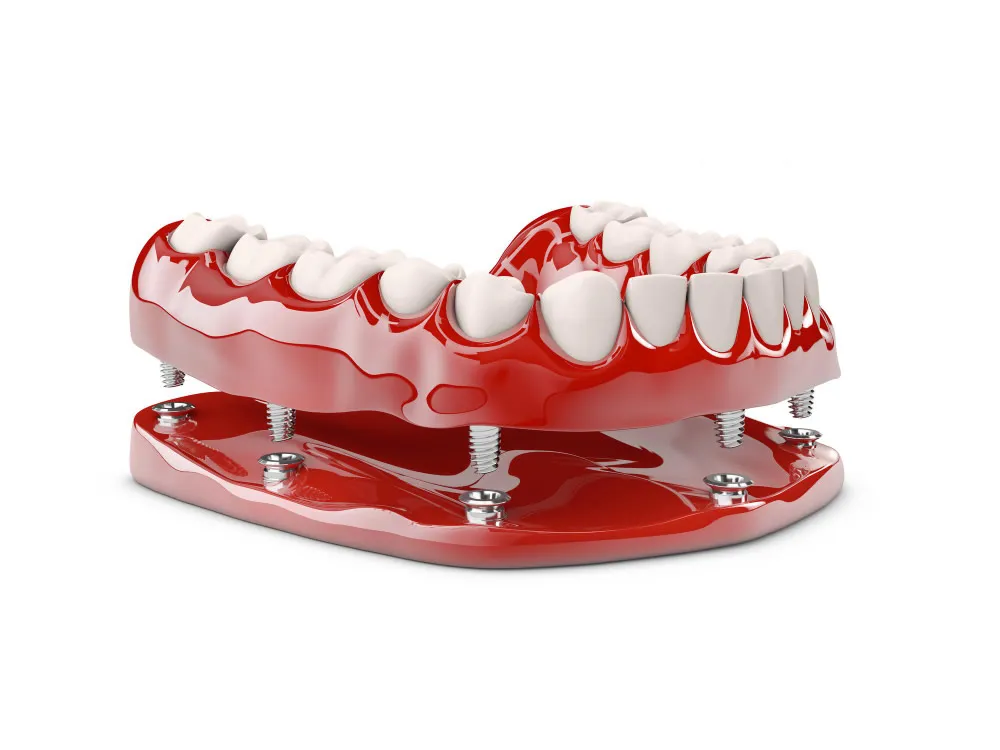
2. Implant-Supported Fixed Prostheses
Fixed prostheses placed on dental implants inserted into the jawbone.
An excellent permanent solution for edentulous patients.
They do not move and provide a feeling very close to natural teeth.
3. All-Ceramic Crowns (E-Max, Zirconia)
Used in single or multiple tooth restorations for patients with high aesthetic expectations.
They offer a natural appearance thanks to their light translucency.
Advantages of Fixed Dental Prostheses
Natural Appearance: Designed in harmony with tooth color and anatomy, making them indistinguishable from natural teeth.
Fixed and Secure: Cannot be removed by the patient and provide daily comfort.
Speech and Chewing Quality: Offers the highest performance compared to other alternatives.
Long-Lasting: Can be used for 10–20 years with proper care and regular check-ups.
Aesthetic Success: Provides an impressive smile, especially for front teeth.
Who Is Suitable for Fixed Prostheses?
Individuals with single or multiple missing teeth
Edentulous patients (with implant-supported fixed prostheses)
Those who do not want to use removable dentures
Individuals with good oral hygiene
Patients with sufficient bone and tooth support
Note: A detailed examination and radiographic evaluation are required before applying fixed prostheses.