
Tooth decay is one of the most common problems that threatens oral and dental health, and it can occur in every age group. A small defect that begins on the tooth surface may progress over time, leading to serious outcomes such as pain, infection, and even tooth loss. Many people notice tooth decay only when pain starts, but in reality the decay process often advances silently at much earlier stages. For this reason, understanding how tooth decay forms, which signs it may show, and when it should be taken seriously is essential for protecting teeth in the long term.
What Is Tooth Decay and How Does It Develop?
Tooth decay is a loss of tooth structure that begins when acids produced by bacteria on the tooth surface damage the enamel. Bacteria naturally present in the mouth feed on sugary and carbohydrate-rich foods and produce acids. These acids weaken the enamel and, over time, create microscopic pores and defects in the enamel layer.
At first, tooth decay affects only the enamel and usually does not cause pain. If it is not noticed at this stage, the acid damage deepens and reaches the dentin layer. Since dentin is softer than enamel, decay can progress faster at this stage. If the process continues, the decay may reach the dental nerve.
Oral hygiene plays a major role in the development of tooth decay. When teeth are not brushed regularly, plaque builds up more easily, and this plaque layer creates a suitable environment for decay. For this reason, tooth decay is often the result of neglected daily habits.
What Are the Early Signs of Tooth Decay?
When tooth decay is detected early, it can be controlled much more easily. However, symptoms at this stage are often mild and may be overlooked. One of the earliest signs is the appearance of white or dull spots on the tooth surface. These spots indicate that the enamel is losing minerals.
As decay progresses, sensitivity to hot, cold, or sweet foods and drinks may occur. This sensitivity is typically felt as a short, sharp twinge. Especially when this reaction is noticed in a specific tooth, it may be an early warning sign of tooth decay.
In more advanced stages, brown or black discolorations may be seen on the tooth surface. In some cases, food getting stuck in a particular area may also indicate decay. When these signs appear, the decay has usually reached a more progressed stage.
What Causes Tooth Decay?
The main cause of tooth decay is dietary and hygiene habits that lead bacteria in the mouth to produce acids. Frequent consumption of sugary foods causes bacteria to produce more acid. These acids wear down the enamel and trigger the start of decay.
Insufficient brushing and not using dental floss significantly increase the risk of tooth decay. Plaque that builds up between teeth often leads to cavities starting in these areas. In addition, going to sleep without brushing at night allows acid attacks in the mouth to continue for longer.
Saliva amount is also an important factor in tooth decay. Saliva helps protect teeth by neutralizing acids in the mouth. When saliva flow decreases, the risk of decay increases. Certain medications, dry mouth, and systemic diseases can contribute to this situation.
At What Ages Is Tooth Decay More Common?
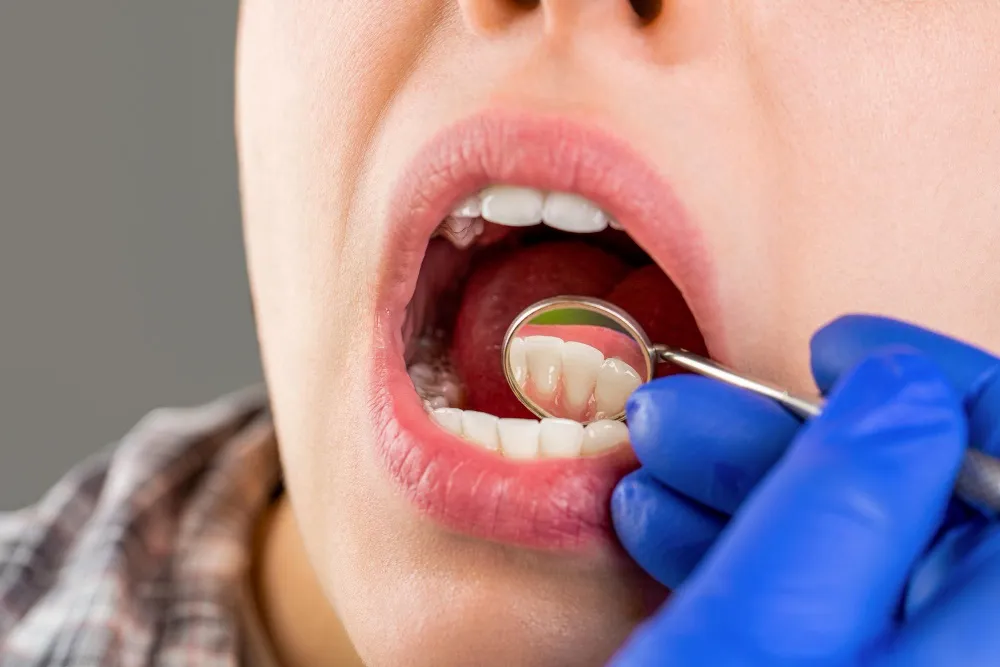
Tooth decay can occur at any age, but it is more common during certain periods. In childhood, primary teeth have a more delicate structure, so the risk of cavities is higher. Not cleaning the teeth after bottle-feeding can lead to early childhood caries.
In adolescence and young adulthood, dietary choices and irregular oral care can trigger tooth decay. Consumption of sugary and acidic foods often increases in this period. Without consistent care, cavities may progress quickly.
In older ages, gum recession may expose root surfaces. Since these areas are not protected by enamel, decay can form more easily on the root surface. Also, dry mouth becomes more common with age, which can further increase cavity risk.
What Happens If Tooth Decay Is Not Treated?
If tooth decay is not treated, it follows a progressive course and may lead to more serious problems over time. A cavity that begins as a small enamel defect can cause pain and sensitivity once it reaches the dentin layer. If it is not treated at this stage, it can advance to the tooth nerve.
When decay reaches the nerve, it may cause severe pain, infection, and abscess formation. The infection can spread to surrounding tissues and may affect the jawbone. This can negatively impact not only oral health but overall health as well.
In advanced cases, the tooth may become impossible to save and extraction may be necessary. Tooth loss can lead to impaired chewing, shifting of neighboring teeth, and aesthetic concerns. For this reason, tooth decay should be detected and treated early.
Can Tooth Decay Be Treated at Home?
Tooth decay cannot be completely eliminated at home. Because a cavity is a structural loss in tooth tissue, it does not heal on its own. However, at a very early stage—when decay is limited to the enamel—its progression may be stopped with certain measures. The goal at this stage is to prevent the cavity from growing and to protect tooth structure.
The most important action at home is maintaining proper oral hygiene. Regular brushing, flossing, and limiting sugary foods can slow the progression of tooth decay. Fluoride toothpastes may also help strengthen the enamel layer.
However, if tooth decay has reached a certain depth, home care will not be sufficient. In such cases, professional treatment is necessary. Home care is valuable for prevention and protection after treatment, but it is not a standalone cure.
How Is Tooth Decay Treated?

Treatment for tooth decay is planned based on how deep the cavity is and the overall condition of the tooth. In early-stage surface cavities, the damaged area can be cleaned with minimal removal of tooth tissue and restored with a filling. This method preserves much of the tooth’s natural structure.
When decay progresses into the dentin layer, a larger area must be cleaned. At this stage, decayed tissue is removed and the tooth is rebuilt using appropriate filling materials. A filling stops the cavity from progressing and restores the tooth’s function.
If decay reaches the nerve, root canal treatment may be needed. In this procedure, infected nerve tissue is removed and the inside of the tooth is filled with special materials. The goal is to keep the tooth in the mouth. Without treatment, extraction may become unavoidable.
Does Tooth Decay Cause Pain?
Tooth decay does not always cause pain. Especially in early stages, many people feel no discomfort. This is one of the main reasons cavities are detected late. Pain usually appears when decay progresses and reaches the dentin layer.
At first, pain is often felt as a brief sensitivity when the tooth comes into contact with cold, hot, or sweet foods. This discomfort usually goes away when the stimulus is removed. As the cavity progresses, pain can occur more frequently and last longer.
When decay reaches the nerve, it may cause severe, throbbing pain that can even wake a person at night. At this stage, pain may occur spontaneously and persist for a long time. Such pain strongly suggests advanced decay.
How Can Tooth Decay Be Prevented?
The key to preventing tooth decay is developing regular and correct oral care habits. Brushing at least twice a day with proper technique reduces plaque buildup and significantly lowers the risk of cavities. Flossing is especially effective for preventing decay between teeth.
Diet also plays a major role in cavity formation. Frequent consumption of sugary and acidic foods increases the risk of tooth decay. Limiting these foods and paying attention to oral hygiene after consuming them provides a protective effect.
Regular dental checkups help detect cavities at an early stage. With early intervention, tooth decay can be controlled before it progresses and more extensive treatments can be avoided.
When Should You See a Dentist for Tooth Decay?
The best approach is to seek evaluation as soon as tooth decay is suspected. If you notice discoloration, sensitivity, food getting stuck, or surface roughness/holes, you should get checked without delay. These signs are often early indicators of a cavity.
Waiting until pain starts usually means the cavity has progressed. In particular, spontaneous pain, pain that worsens at night, or discomfort that lasts for a long time requires urgent evaluation. These symptoms may suggest that decay has reached the nerve.
When tooth decay is detected early, it can often be treated with simpler and more conservative methods. For this reason, routine dental checkups—without waiting for pain—help protect teeth over the long term.